


Bunny Chow vs Kota: South Africa’s Most Iconic Street Foods Compared
- Zenani Sizane

- Jun 18, 2025
- 3 min read
Introduction
Welcome to the ultimate showdown between two South African legends: Bunny Chow and Kota. These aren’t just meals, they’re icons of culture, creativity, and community. Both born in the townships, both built on bread, and both loaded with flavor, Bunny Chow and Kota have earned their places as staples in the hearts (and bellies) of millions.
Whether you're a curious foodie, a traveler seeking local eats, or a home cook looking to recreate authentic South African flavors, this post will walk you through their origins, ingredients, flavors, and what makes each so beloved.
1. Origins and History
Bunny Chow:
Born in Durban, Bunny Chow has Indian-South African roots.
It was originally a way to serve curry to Indian laborers during apartheid when many were not allowed to eat in certain establishments.
The idea was genius, curry placed inside a hollowed-out loaf of bread created a portable, utensil-free meal.
Though originally vegetarian, it evolved to include mutton, chicken, beans, and more.
Kota:
Kota, short for "quarter", refers to a quarter loaf of bread sliced open and filled with indulgent toppings.
It’s a Gauteng township invention, especially popular in Soweto, that quickly became a student favorite and community staple.
Designed as an affordable, filling, customizable meal, Kotas are all about creativity and local flair.
2. Base Ingredient: The Bread
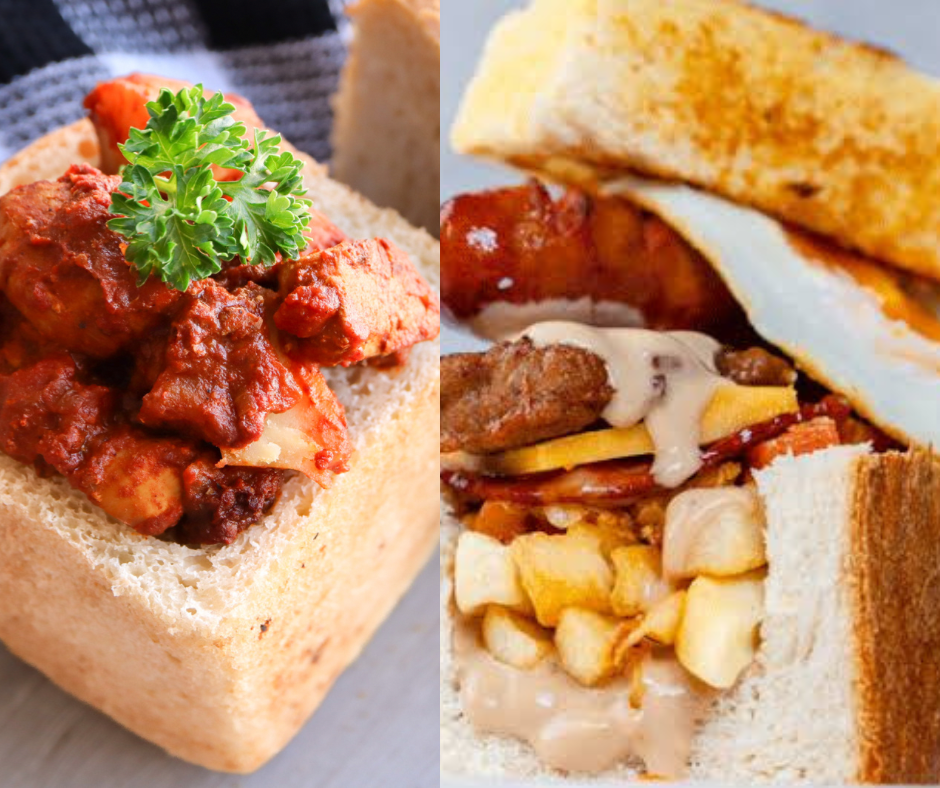
Bunny Chow:Uses a hollowed-out half or quarter loaf of white bread. The center (called the “virgin”) is served on the side or placed on top.

Bunny Chow Kota:Also uses a quarter loaf, but it’s not hollowed out. Instead, the loaf is sliced open and stuffed like a monster sandwich.

Photo Credit @ thecitizen
Similar bread, but different execution. One is a bread bowl, the other is a loaded pocket.
3. Filling and Flavors
Bunny Chow:
Filled with spicy Indian-style curry, think lamb, chicken, beans, or mince.
Flavors are rich, deep, aromatic, and gravy-heavy.
Traditionally spicy and eaten warm, dripping down your fingers as you go.
Kota:
A total mix of slap chips (fries), polony, cheese, atchar, Russian sausages, fried eggs, and a drizzle of sauces (mayo, chili, BBQ).
Some are wild and over-the-top, add fried chicken, ribs, or burger patties.
It's all about texture, flavor stacking, and indulgence.
4. The Eating Experience
Bunny Chow:Meant to be eaten with your hands. Messy. Spicy. Bold. It’s an experience.
Kota: Also eaten by hand but feels more like devouring a gourmet sandwich. Hearty and often shared or conquered solo by the brave.
Both are casual, no-cutlery-required, and unapologetically delicious.
5. Regional Popularity
Bunny Chow: Most famous in KwaZulu-Natal, especially Durban.
Kota: Reigns supreme in Gauteng, Soweto, Johannesburg, and Pretoria.
6. Cultural Significance
These two dishes are more than food, they’re symbols of resilience and ingenuity.

Bunny Chow represents adaptation under apartheid, a product of necessity turned into a national treasure.

Kota reflects township innovation and youth culture, where limited ingredients are turned into a feast.
Both show how communities use food to express identity, creativity, and comfort.
7. Where to Try Them
Bunny Chow Hotspots:
House of Curries – Durban
CaneCutters – Overport
Gounden’s – Umbilo
Top Kota Spots:
Kota Joe – Gauteng
Wandie’s Place – Soweto
Your local spaza shop – the most authentic places are often the most humble!
8. Fun Facts
Bunny Chow once had its own World Championship.
Kotas can weigh over 1kg and be stacked higher than your head.
Bunny Chow is now served in restaurants around the world even in London and Australia.
There are now dessert Kotas made with Nutella, sweets, and ice cream!

Photo Credit @ instant pot
Conclusion: Which One Wins?
Honestly? You decide.
Craving curry? Go Bunny.
Want a loaded, customizable feast? Pick Kota.
Better yet, host a Bunny vs Kota night with friends and sample both.
No matter which you choose, you’re tasting a piece of South Africa’s flavorful soul.
Try Next: Make your own Bunny Chow at home – full recipe post here!
DIY Kota Guide – full recipe post here with tasty variations and topping combos.


Comments